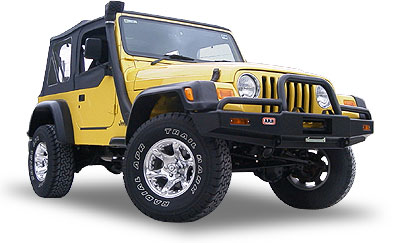
.jpg)
Remarks | |
Ok | |
Ok |
1st test | 2nd test | |
DRIVER’S SIDE | 16.5 | 16.5 |
Passenger’s Side | 19.0 | 16.5 |
1st test | 2nd test | |
DRIVER’S SIDE | 16.5 | 16.0 |
Passenger’s Side | 19.0 | 16.0 |
 MY ride at Fil-Am Park, Olongapo City
 First off-road: parola dredging site
 We don't use the tire gauge when we figure out what pressure to run our tires at. We use crayons or chalk. Draw a line across the tread of the tire and drive in a straight line until you notice wear (usually 50-100 feet). Once that's done, we note the correct pressure front and rear for reference later.
 This is what the crayon line looks like if your tire is over-inflated. Notice the crayon remaining on the outer edge of the tire. Under-inflated would be the exact opposite of this, with the line worn from the edges (not from the middle).
Grasp the transfer case shifter on your Jeep and shift from two-wheel drive to four-wheel drive high range by pulling straight back on the shifter from "2H" to "4H." This shift can be made at any speed less than 55 miles per hour, without stopping. The case will shift easier if you ease off the throttle as you move the lever.
Slow the vehicle to two or three miles per hour if you must shift the transfer case to four-wheel drive low range. Shift you transmission to neutral then grasp the transfer case shifter. With the Jeep still coasting, shift the transfer case quickly from "4H" into "N" and from "N" into the "4L" position.
Shift the transmission back into gear and slowly accelerate. Do not drive your Jeep over 25 miles per hour in low range, or you will damage the transfer case. Shifting back up through the gears is the reverse of the procedure in the preceding steps.

The Jeep CJ (or Civilian Jeep) is a public version of the famous Military Jeep from World War II.
The first CJ prototype (the CJ-2) was introduced in 1944 by Willys, and the same basic vehicle stayed in production through seven variants and three corporate parents until 1986.
A variant of the CJ is still in production today under license. The last CJs, the CJ-7 and CJ-8, were replaced in 1987 by the Jeep Wrangler.


http://blog.willysjeep.com/wp-content/uploads/2010/03/bhsmall.jpg bigger photo
The model 8-BH Backhoe for the Willys CJ5 model was a hydraulically operated device which attached to the small bed of the Jeep. It carried outrigger pads for stability and featured bucket widths of 12″ -20″ with replaceable teeth. It did require the 7000 # dual rear wheel axle to support it along with full length frame reinforcement. It was manufactured by Go- For-Digger Company with offices in Toledo,Oh and Hawthorne ,Ca.
This unit could dig to a depth of 8 feet and had a side to side swing of 170 degrees. It utilized a six spring clutch plate and feramic clutch disc for long life. Its dual hydraulic pumps had a top capacity of 11 gallons per minute at a low 100 rpm’s. The use of two pumps was purportedly the latest design to provide greater efficiency at lower maintenance costs.
It used the smaller one to control side swing and downriggers while the large one was dedicated to the bucket itself.
This was quite the apparatus to be carried on the modified CJ5 with its F-134 and 3 speed transmission. As it was a self transported machine, the savings over another hauler/trailer could be substantial.

 http://www.jeepforum.com/forum/f104/post-your-jeep-trailers-offroad-trailer-pics-here-569561/index2.html
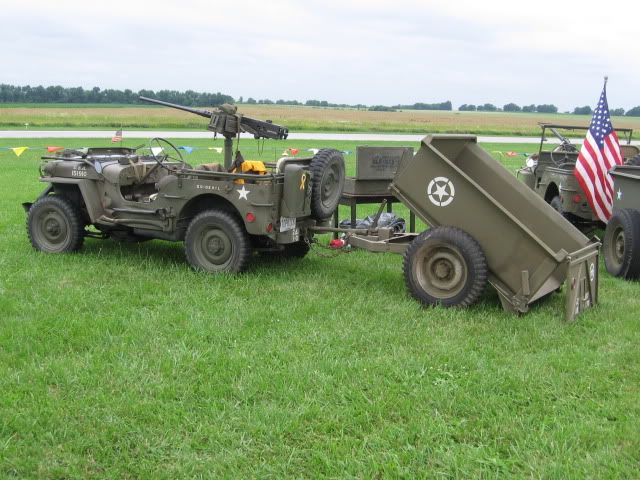 DUMPERS, Great for declogging and landfilling operations
 LOCKS
LOCKS CONTROL LEVERS
 http://varozza4x4.com/jeeptrailers.aspx
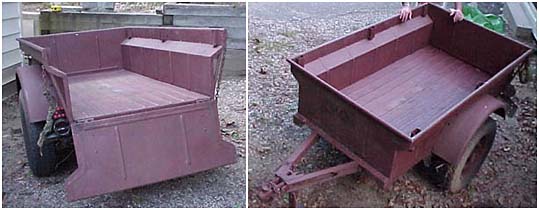 http://bantamt3c.com/images/hubbard/Pages/Bantam3.html
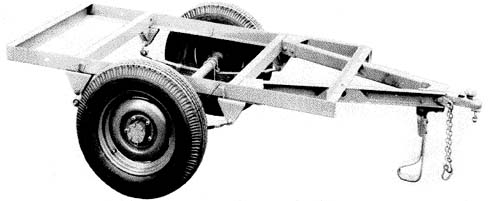 http://bantamt3c.com/images/hubbard/Pages/Bantam4.html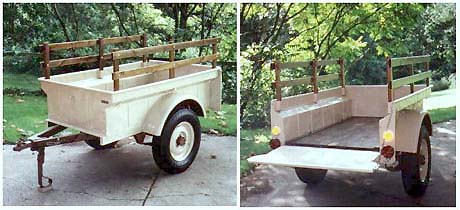

 http://www.traildoors.com/photo4.html
 http://www.valleyautorecycling.com/rich_text_1.html
 Olongapo City Subic Bay Passenger Jeep
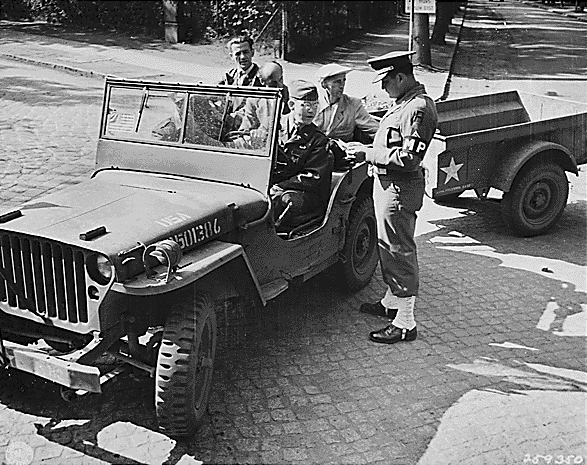
 Military Jeeps in Subic Bay (1947)


.jpg)
.jpg)
.jpg)
.jpg)
.jpg)